A plant manager hears the term site intelligence from a vendor, or a colleague forwards a deck that uses it. A search turns up an intelligence research group and security services, with nothing about a plant floor or a warehouse dock. This guide covers the industrial meaning.
Site intelligence is the layer that joins a site's operational records with computer vision from its existing cameras. The records show when and where a problem happened, and the footage can show why. Read together, they give site leaders a picture of what is happening on the floor, in time to act.
In this guide:
- Video is processed on an edge device on site, and each organization sets its own privacy controls.
- Site intelligence works on top of the safety, production, and warehouse systems a site already runs, and replaces none of them.
- Workflows cover repeat stops, congestion by shift, process adherence, and safety conditions.
- People still check the evidence, establish the cause, and choose the change.
What Site Intelligence Means for Industrial Operations
In industrial operations, site intelligence combines two streams of evidence about the same physical site: the digital record held in business systems and the physical reality captured on camera. It applies to manufacturing plants, warehouses, and distribution sites.
Records Show When, Footage Shows Why
A warehouse management system (WMS), a manufacturing execution system (MES), a labor management system (LMS), and environment, health, and safety (EHS) software show when a line stopped, which order shipped late, or where an incident was logged. Footage from the same place and time can show what caused it.
One Stream or Both
Some problems need only one stream. Plant records alone can show how much time changeovers take across products, and video alone can show why an automated cell keeps stopping. A cleaning standard between product pairs needs both: the schedule says which pair ran, and the footage shows if the cleaning took place.
One Platform, Three Capability Layers
A site intelligence platform works as one system with three capability layers. An observability layer brings together data from those business systems, computer vision reads footage from existing cameras, and a combined view sets the two side by side.
How Site Intelligence Works on a Site
Site intelligence joins camera evidence to the site's own records in five steps.
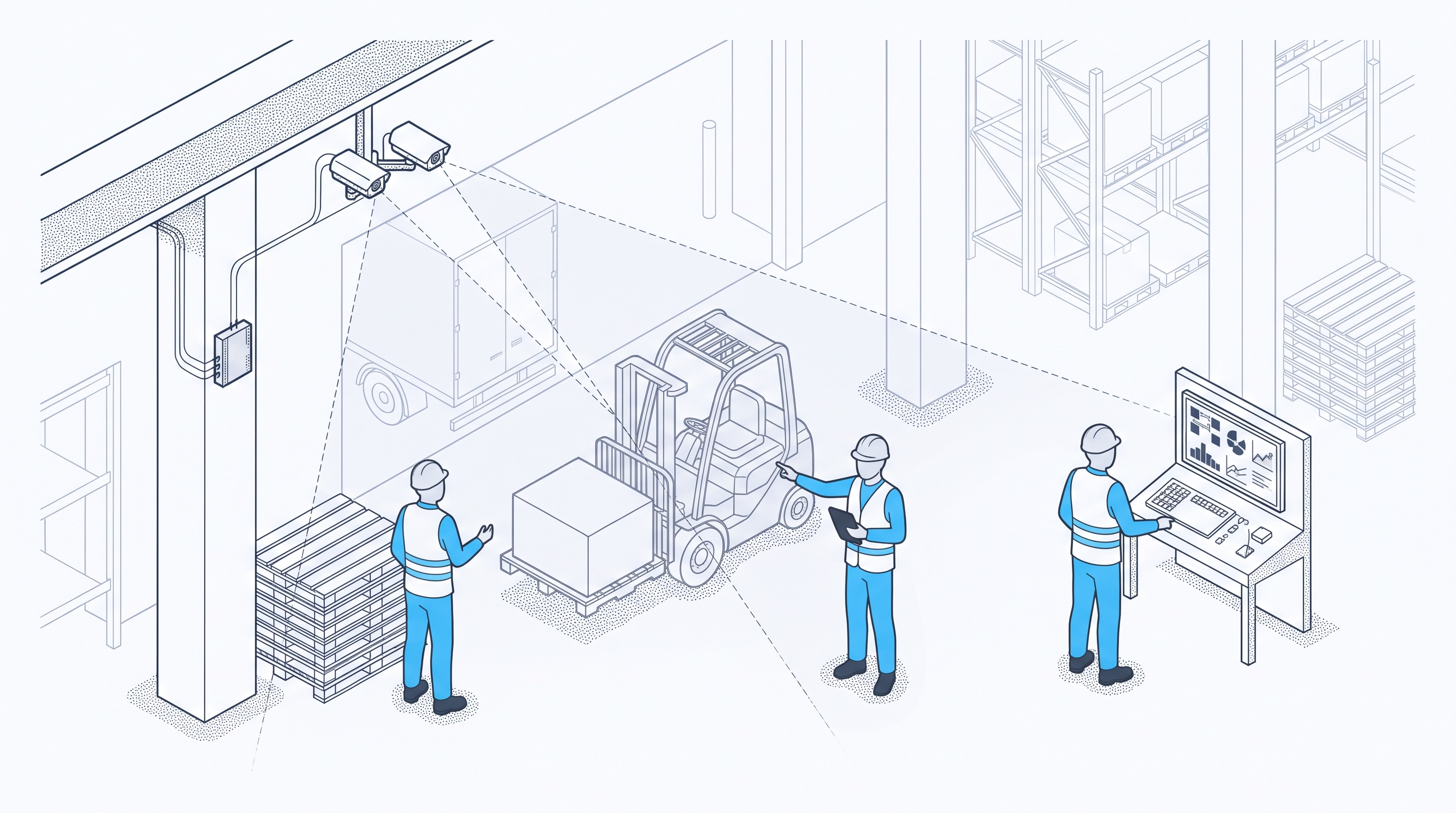
- Protex AI runs on the closed-circuit television (CCTV) cameras already in place, with a secure edge device on site.
- The edge device processes the continuous video stream locally, and the stream stays on site. Short encrypted event clips and event details, such as when and where each event occurred, can reach the cloud according to how the site configures them.
- Teams define the zones and events that matter, such as a dock lane, a work cell, or a pedestrian walkway.
- Events can be read alongside the production, warehouse, and safety records the site connects, from the same time and place, so a stop or a slowdown shows up with its context.
- Teams work from dashboards, reports, and alerts. On-site operational alerts arrive in near-real-time, roughly 15 to 20 minutes.
Inside a zone, the cameras measure what can be seen: counts of people or vehicles, how long something stays still, movement within one camera view, congestion, throughput along a line, and proximity between people and vehicles. The system describes observable states and movements and does not read intent. Each site also sets the privacy mode for its footage, covered below.
Site Intelligence Compared With EHS Software, CCTV, and MES
Site intelligence works on top of the systems in place, from EHS software to the MES. It adds the physical evidence those systems were never built to capture and links it back to the records they hold.
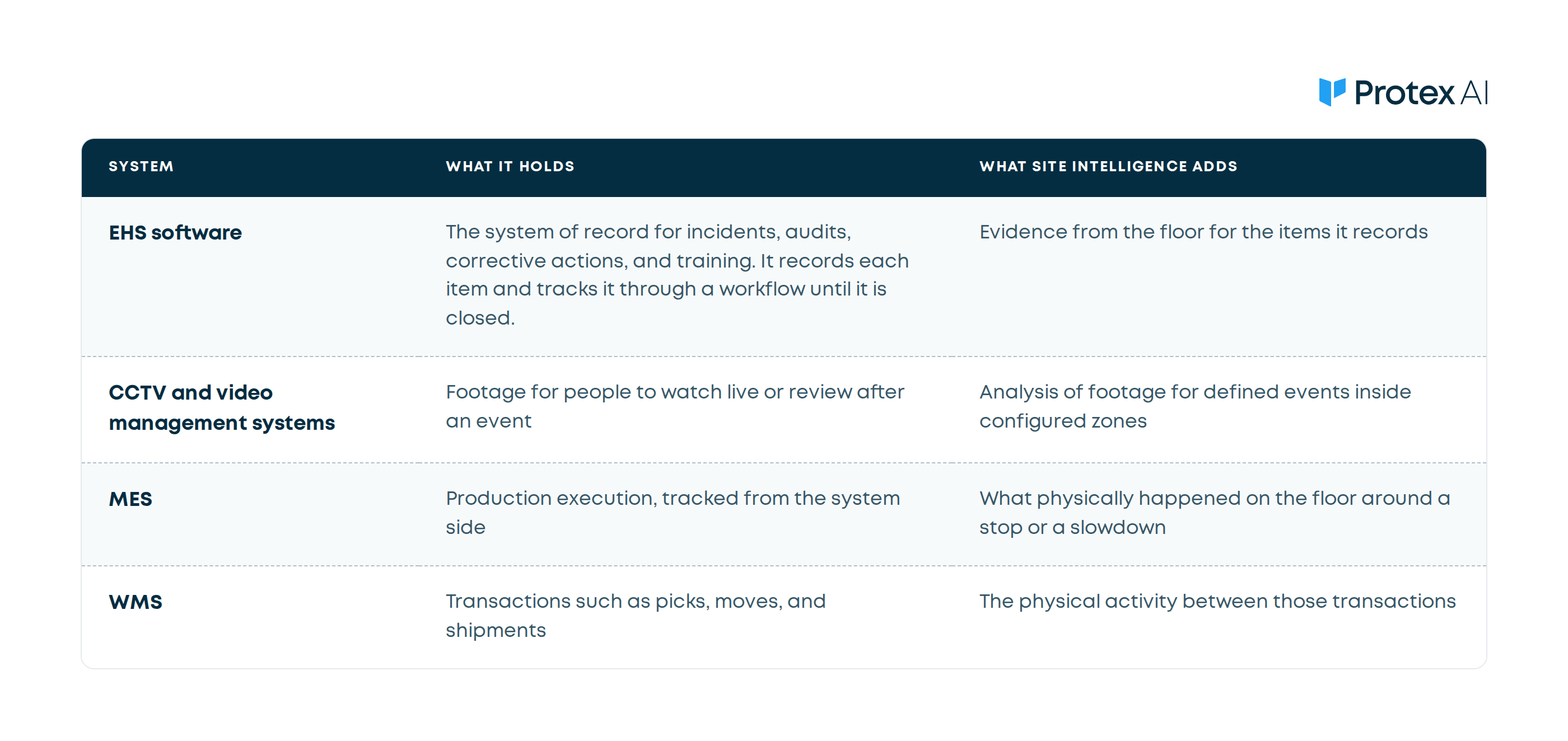
A site that runs all four still has gaps between them. The MES logs when a line went down and when it restarted, and no system records what happened at the station in between. Site intelligence adds footage of those minutes, so the team can check what happened around the stop before deciding why.
Site Intelligence Workflows in Manufacturing and Warehousing
Three operations workflows show site intelligence at work, from a line that keeps stopping to a procedure that drifts between shifts.
Downtime and Repeat Stops
Business systems log that a line stopped. They rarely show why the same stop keeps coming back, because a reason code records what the operator saw at the time, and the physical cause can sit somewhere else.
At Bendix Commercial Vehicle Systems, continuous video from Protex showed an automated work cell repeatedly striking racks. That evidence helped Bendix justify a permanent fix that recovered an estimated 226 labor hours a month, as the published Bendix case study reports.
Teams that own repeat stops can use downtime and process analysis to find which stops recur and what physically causes them.
Congestion and Flow
Congestion at docks, aisles, and intersections tends to repeat by shift. Transaction data shows when a pick or a load was completed. It cannot show where people and vehicles waited beforehand.
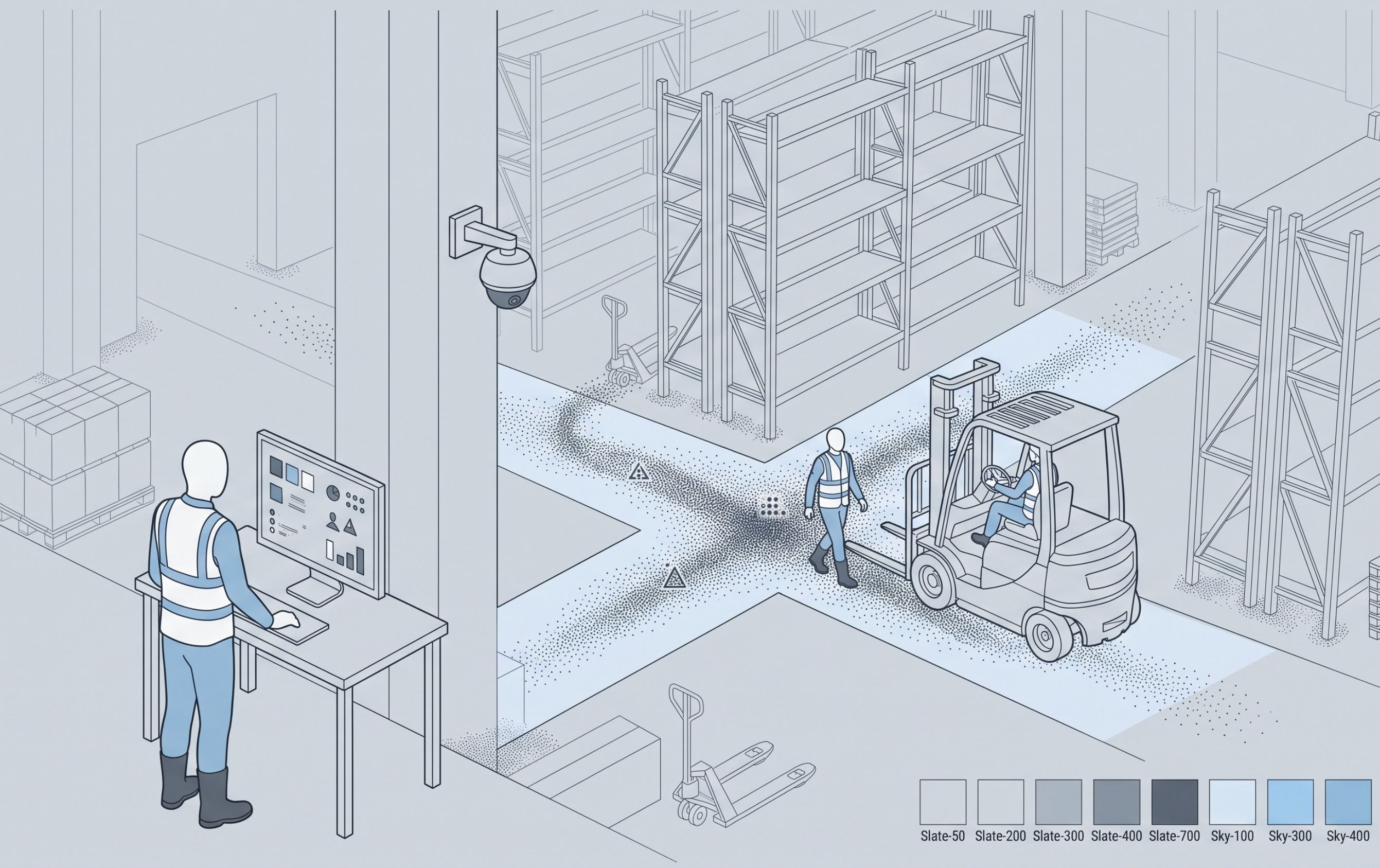
Inside configured zones, site intelligence measures dwell time, paths, and congestion, reported at zone level. Teams running warehouse operations can then adjust layout, routing, or staffing for the shifts where waits build up, and check the effect with the same measures.
Process Adherence
Manual audits sample a small share of shifts, so drift from the standard between samples goes unseen until it shows up in the results. That sampling gap is one reason process audits miss problems.
One example in the Beyond the Clipboard whitepaper comes from a global e-commerce and logistics company using Protex AI. Its picking procedure required a cart when workers carried multiple packages to distant bins. Computer vision measured the work across shifts and found that 31 percent of picks were completed without a cart.
The data also showed which shifts needed focused training to bring adherence back to the standard. The company estimated that continuous measurement could replace approximately 13,000 hours of manual auditing each year.
Safety Conditions
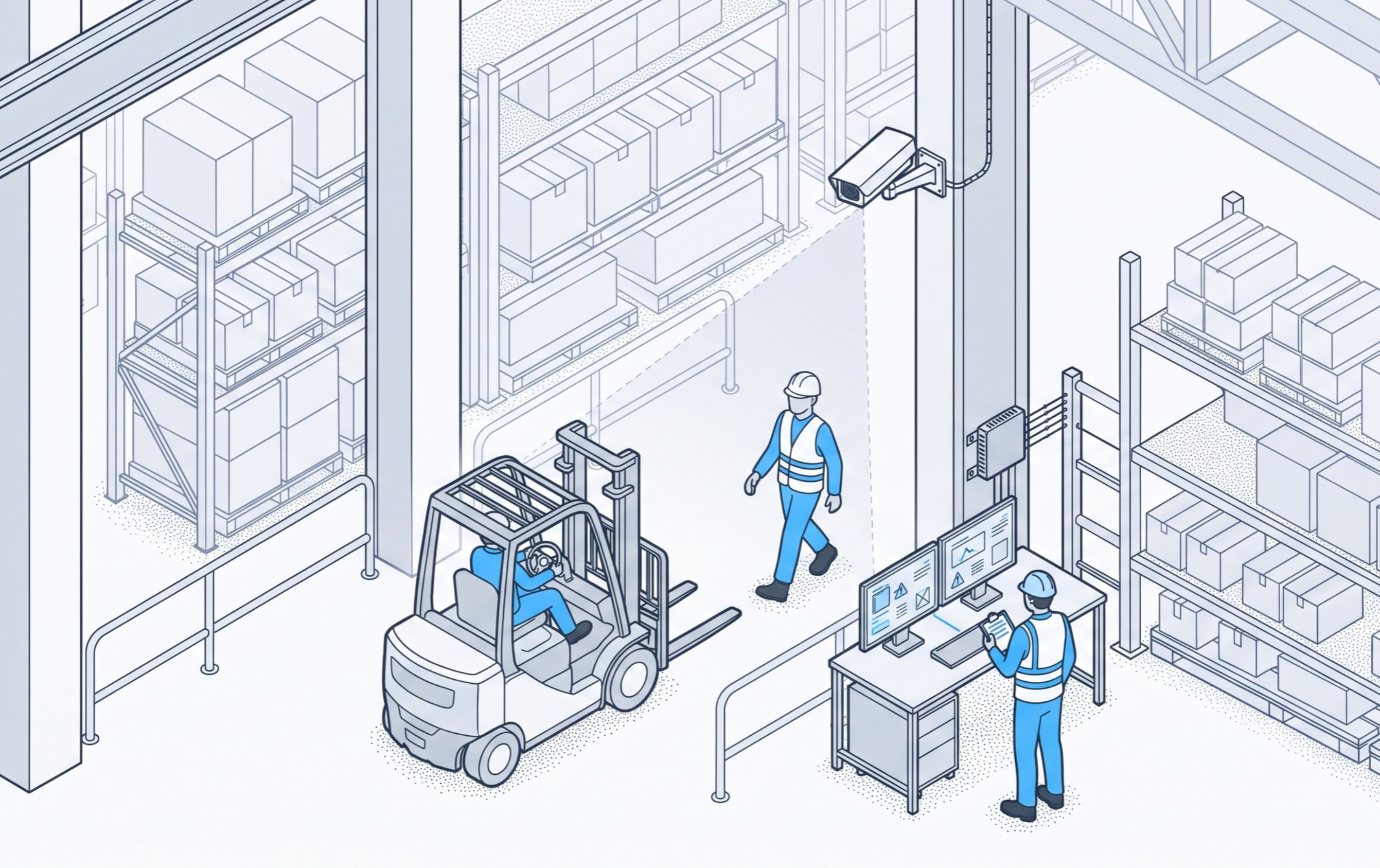
The same cameras and zones can flag safety conditions, such as vehicles and pedestrians coming too close or missing personal protective equipment (PPE). Safety and operations teams then work from one evidence base, so a layout change can be checked for its effect on both flow and safety.
People, Privacy, and the Limits of the Evidence
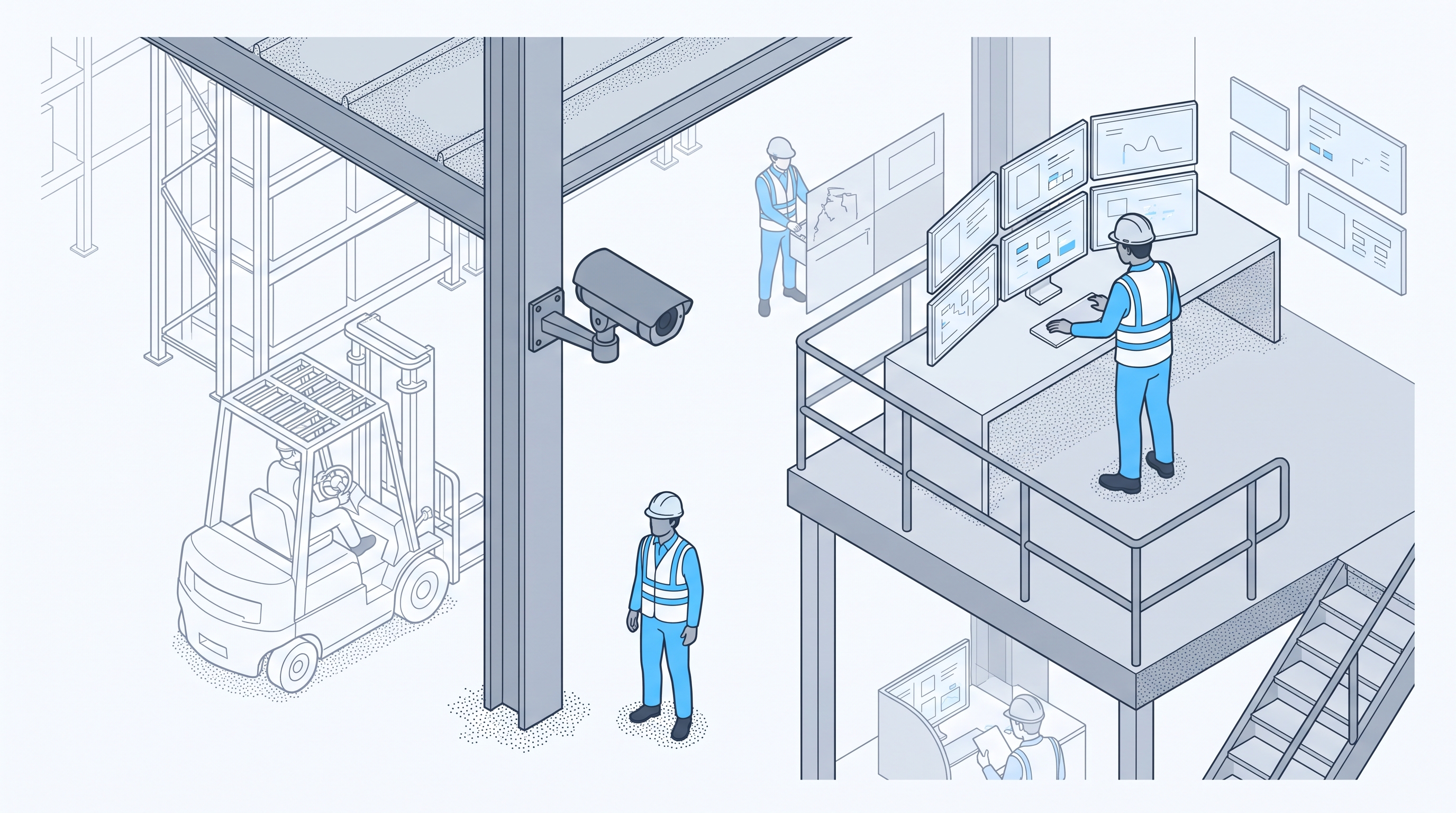
Site intelligence produces evidence, and people decide what it means. Engineers and site teams check the evidence, establish the cause, choose the change, and own the result. A camera does not prove cause by itself, and the system makes no business decisions.
Privacy settings belong to the organization running the site. Protex's privacy controls cover anonymization, facial blurring, full-body blurring, ghosting, and videoless operation, all customizable to the organization's policies, legal requirements, and workforce agreements. Protex does not perform biometric identification, and insights are reported at zone and process level, with no scoring or ranking of individuals.
Limits to plan for:
- Zones need setup, and only configured areas are measured.
- Automated classifications need checking, so engineers watch for missed and false events and for changes in process, lighting, or camera position that affect accuracy.
- Site intelligence supports supervisors and EHS teams, replaces neither, and cannot prevent every incident.
Five Tests for Site Intelligence Evidence
The Beyond the Clipboard whitepaper, written for continuous improvement (CI) teams, closes with five tests for judging site intelligence: coverage, context, reproducibility, auditability, and human ownership. Each test comes down to a question the team can ask of its own evidence.
- Is the loss measured across shifts and operating conditions, beyond a short study window?
- Can each event be read with the schedule, product, asset, standard, and owner behind it?
- Are classifications steady enough to compare lines or sites?
- Can the team show the evidence, the decision that followed, and the measurement after the change?
- Does the evidence support the engineer's judgment and leave the decision with the engineer?
A deployment that cannot meet these tests can still be useful for monitoring. It has yet to show a change in how the team measures its losses.
Common Questions About Site Intelligence
Is Site Intelligence the Same as Safety Computer Vision?
No. Safety computer vision turns camera footage into safety events, such as vehicle and pedestrian interactions or missing PPE, which give EHS teams leading indicators. A site intelligence platform combines those camera detections with operational and business data. One deployment can then serve safety and operations goals, such as facility flow and process compliance.
Which Teams Use Site Intelligence?
Operations leaders look for the physical pattern behind a missed target, and supervisors compare how work runs from shift to shift. EHS and safety leaders draw on evidence about conditions such as proximity and PPE, while IT leads review the deployment and how data is handled. In manufacturing, CI teams measure losses with it before choosing an improvement.
Can Site Intelligence Compare Lines or Sites?
Yes, once events carry the same definitions at each line or site, since a comparison means little when each one counts differently. Protex supports rule templates and central policy management, so a rule set once can apply across sites. Cross-site views can then show which local improvements deserve a wider rollout.
Start With One Question the Records Leave Open
Most sites begin with a problem their records flag but cannot explain, such as a stop that keeps coming back or waits that build up on one shift. See how Protex applies site intelligence for industrial operations across downtime, flow, and process adherence.
Check Out Our Industry
Leading Blog Content
EHSQ industry insights, 3rd Gen EHSQ AI-powered technology opinions & company updates.