Industrial Manufacturing AI Safety Solution

Protex empowers industrial manufacturing organizations with full visibility into safety risks, enhancing worker protection in this fast-paced industry. With Protex, companies can proactively identify and mitigate potential hazards, creating safer manufacturing environments and promoting a culture of safety.

Proactively Detect and Address Workplace Risks

Downtime Dynamics

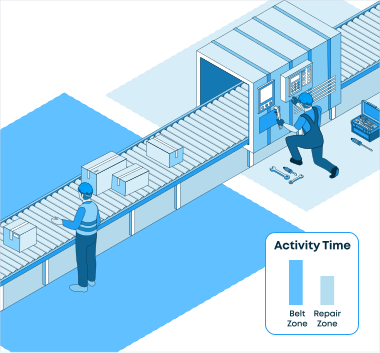
Explore how machine changeovers vary across time and stages. Highlight where sequences shift and handoffs break down, with video insights uncovering structural drivers behind changeover variability. Quantify where time accumulates across process stages so teams can identify friction points during normal operations

Behavioral Safety GIF

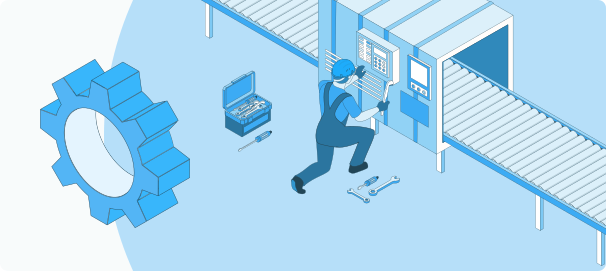
Machine Area Control

Your CCTV can help you establish a safe zone between workers and dangerous machinery. Protex AI flags proximity to dangerous equipment, helping you implement safeguards and prevent accidents.

Line Starvation

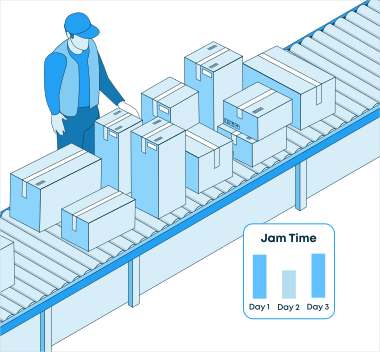
Material flow interruptions upstream rarely stay contained. Measuring when and how long stations are without incoming material highlights the upstream constraints behind supply gaps so teams can trace systemic causes before they ripple further across the operation.

Behavioral Safety GIF

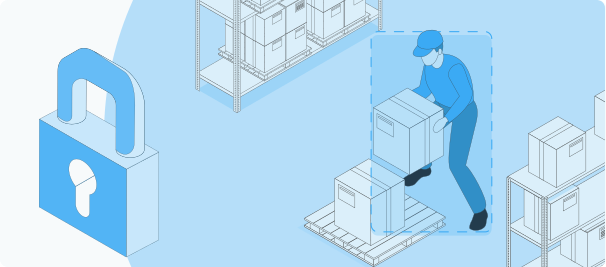
Incorrect PPE Usage

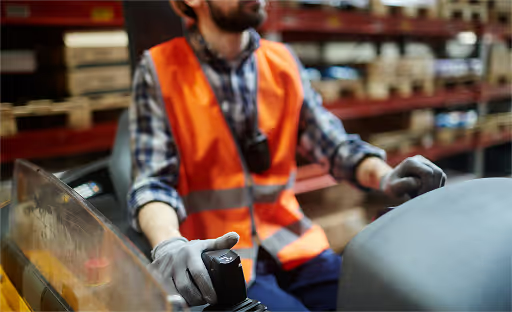
Ensuring correct usage of PPE is an important layer of worker protection. With clips from Protex AI, you can empower your workforce to embrace PPE and cultivate a culture of proactive safety.

Workstation Flow

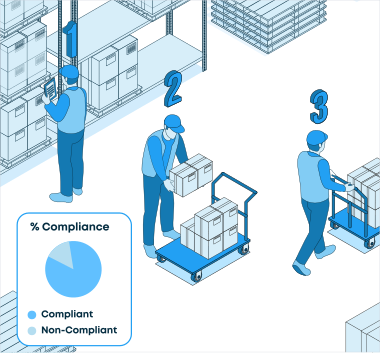
Visualize station-to-station flow across your operation, with insights into sequence, timing, and handoffs. Video insights help you uncover root causes that influence throughput and process stability.

Behavioral Safety GIF

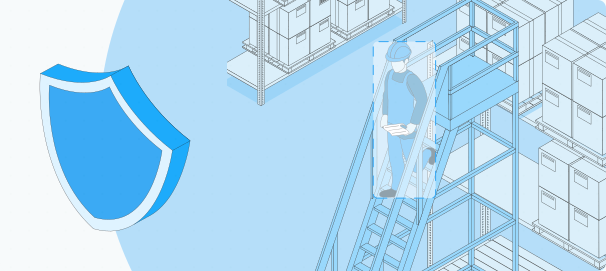
Speed Limit Detection

Enforcing speed limits can pose a challenge in the absence of a dedicated health and safety manager present at all times. With Protex, you can achieve comprehensive visibility into these risks and effectively formulate corrective action plans.

Solution Highlights

Meet the market leader in proactive safety. Our unique approach delivers unparalleled flexibility, robust integrations, deep insights, and secure, privacy-focused solutions that set us apart.

Configurability

Our flexible rule-building feature captures critical events unique to your manufacturing facilities. Customizable dashboards help visualize data, spot trends, and act before risks escalate.

Integrations

Our open API seamlessly integrates with your existing EHS stack, enhancing your business intelligence platforms and EHS systems without adding complexity—just streamlined efficiency.

Insights

Copilot, our Gen-AI tool, combined with intuitive dashboards, delivers instant safety insights, enabling you to identify risks, refine protocols, and make confident decisions.

Privacy & Security

We prioritize secure, on-premises video feed processing to protect your data and preserve workforce privacy, all while delivering essential safety insights.

Configurability

Our flexible rule-building feature captures critical events unique to your facilities. Customizable dashboards help visualize data, spot trends, and act before risks escalate.

Integrations

Our open API seamlessly integrates with your existing EHS stack, enhancing your business intelligence platforms and EHS systems without adding complexity—just streamlined efficiency.

Insights

Copilot, our Gen-AI tool, combined with intuitive dashboards, delivers instant safety insights, enabling you to identify risks, refine protocols, and make confident decisions.

Privacy & Security

We prioritize secure, on-premises video feed processing to protect your data and preserve workforce privacy, all while delivering essential safety insights.

Case Studies

Companies worldwide trust Protex AI to enhance workplace safety and empower their workforce. Learn how our AI-driven solutions proactively protect employees and improve operational efficiency.

Industrial manufacturing
84%

Reduction in targeted behaviors

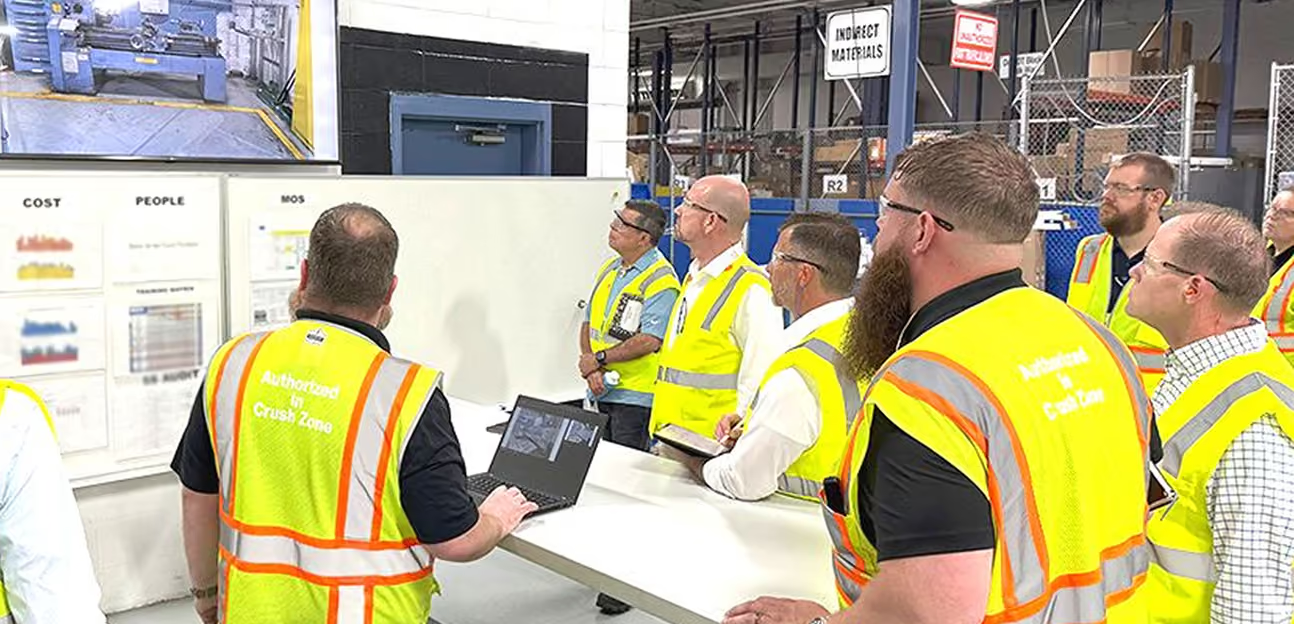
Bendix Commercial Vehicle Systems Turns Data Into Everyday Safety and Operational Wins with Protex AI

Read Case Study
Unbiased visibility and a faster path to behavior‑based safety
Industrial manufacturing
62%

Reduction in safety events

Major UK Packaging Manufacturer Unlocks £750K in Funding and Cuts Safety Events by 62% with Protex AI

Read Case Study
How a leading packaging company used Protex AI to enhance its culture and unlock operational efficiencies with real-time data.
Retail and Wholesale
Warehousing
Warehousing
80%

Reduction In Overall Incidents

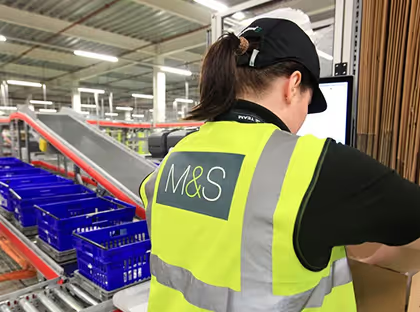
Marks and Spencer Reduced Overall Incidents by 80% in their First 10 Weeks of Deployment

Read Case Study
Marks and Spencer reduced overall incidents by 80% in their first 10 weeks of deployment.
Retail and Wholesale
Warehousing
Warehousing
76%

Reduction In Area Control Risks

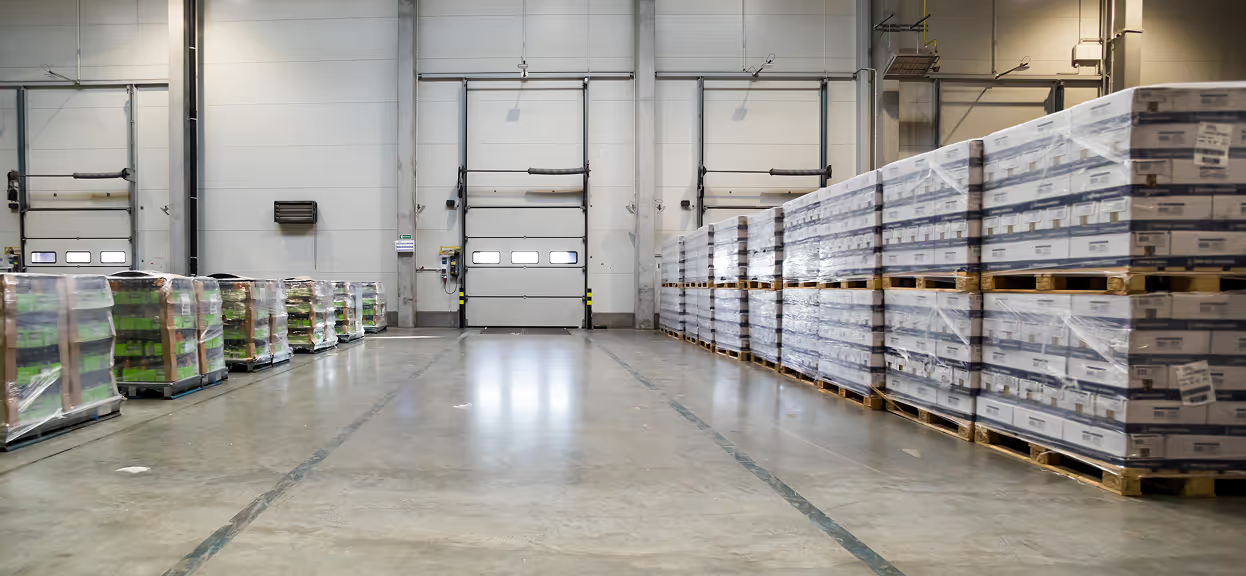
Protex AI Helped A Leading Global Food Distributor Reduce Area Control Risks By 76%.

Read Case Study
Protex AI helped a leading global food distributor reduce area control risks by 76%.
Industrial manufacturing
62%

Reduction In All Safety Events

Protex AI Helped Reduce All Safety Incidents By 62% In A Global Manufacturing Organisation.

Read Case Study
Protex AI helped reduce all safety incidents by 62% in a global manufacturing organisation.

Watch Our 2-Minute Demo Video

Looking to learn more about revolutionizing how you and your team make proactive safety decisions that help contribute to a safer work environment?

Infrastructure Designed For Enterprise Success

Explore how to optimize enterprise safety operations with seamless integrations, secure data processing, and actionable insights.

Learn More With Protex

Check out our latest webinars, whitepapers, and blogs from thought leaders to help you solve your proactive safety challenges.

Blog

The future of workplace safety, key Insights from the "Must Have Safety AI Tools for 2025 Webinar"

Read Blog
Whitepaper

From chaos to clarity: Mastering unstructured data in health and safety management

Download Whitepaper
Webinar

AI Safety in 2024: Planning For Journey To Success

Watch Webinar

Ask The Expert

Here are some common questions our product experts have been asked by EHS professionals around the topic of Al safety. If you have any question in particular that you need answered please don't hesitate to contact us.

How can AI help identify hazards and prevent them?

AI-powered predictive analytics can be used to detect patterns of risk over time by collecting data from various sources such as CCTV, wearables, or IoT devices. AI technology can also be used for real-time risk assessment in hazardous environments. This technology uses computer vision and machine learning algorithms to analyze video streams from cameras installed in hazardous areas and detect any potential risks or unsafe behaviors that could lead to injury or illness.

Another way AI helps with hazard prevention is through automated compliance monitoring. By using AI-powered systems such as natural language processing (NLP), organizations can automate the process of monitoring regulatory standards and requirements related to safety policies and procedures.

How to identify hazards in the workplace?

The first step in identifying workplace hazards is to conduct regular inspections of the area. This should include physical inspections as well as reviewing any relevant safety data, such as accident reports and near-miss incidents.

This involves examining any potential exposure employees may have to hazardous materials or environments and taking steps to reduce that exposure.

An assessment of potential psychological issues that employees may face must also be included. AI powered computer vision solutions integrate with CCTV infrastructures to help identify hazards autonomously across various working environments.

How do I prevent false positives in near miss reporting?

The first step in preventing false positives is clearly defining what constitutes a near miss. Your organization should have a working definition of the term and specific criteria for what qualifies as a near miss incident. In order for reporting systems to work properly and avoid false positives, employees need training on how to report an incident correctly. Another way to reduce false positives is by regularly reviewing errors in your reports. This means looking out for duplicates or inaccurately categorized incidents in your reports, identifying trends or patterns in reported errors, and taking corrective action where needed.

How to prevent workplace accidents and injuries?

The first step in preventing workplace accidents and injuries is establishing a clear safety policy. This policy should outline specific expectations related to safety, including how employees should behave while on the job. The next step is to identify potential risks in the workplace and to take appropriate steps to mitigate or control these risks. Employees must also receive adequate training for prevent any workplace accidents, thus reducing the likelihood of injuries.

How to prevent electrical accidents in the workplace?

One of the most important aspects of preventing electrical accidents is ensuring that all employees are educated on the potential dangers of electricity. It’s also important for employers to ensure that all electrical equipment is properly maintained and inspected on a regular basis. Employees should also be trained on proper use of any electrically-powered equipment they may encounter in their work environment. They should be aware of any safety features built into the machine such as ground fault circuit interrupters (GFCIs) which can help prevent electrocution in case something goes wrong.

What are the tools used to identify hazards in the workplace?

Here are some common tools that can be used to identify hazards in the workplace: Risk assessment matrix: This tool helps EHS teams identify hazards and prioritize them based on their severity and likelihood of occurrence. The matrix has two axes—one for identifying the severity of an accident, and the other for the likelihood of it happening.Job Safety Analysis: This method works by breaking down a job into its individual components and analyzing each step of the process for any potential risks or dangers that may exist.Checklists: EHS teams can also use a checklist to identify any major hazards. The checklist generally includes a series of points or questions that a supervisor or person in charge must go through.

What percentage of workplace accidents are preventable?

According to numerous research studies, up to 99% of accidents can be prevented. In 2021, the National Safety Council reported 4,472 preventable injury-related deaths.

View more
View less