











Facility Flow & Layout Insights
Path Efficiency
Layout changes are expensive to get wrong. Continuous measurement of route deviation and travel time gives teams the objective evidence to make decisions confidently. And with Protex AI, you can measure whether changes are actually working after they're made.
Space Utilization
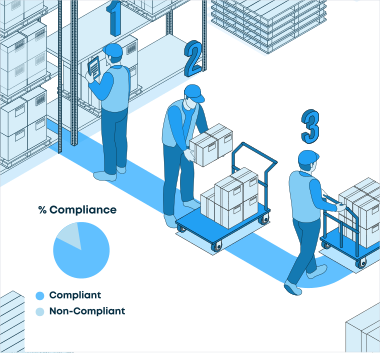
Underused space and and congestion can exist side by side without anyone realizing it. Tracking occupancy and activity patterns across zones over time gives teams the data to rebalance; so you can make layout decisions that hold up across shifts and volume changes.
Intersection Analysis
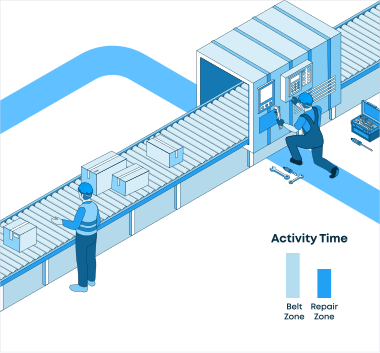
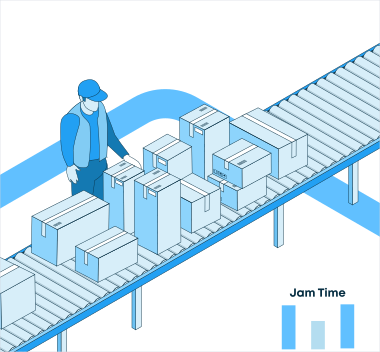
Observe delays at key intersections where paths converge. Highlight congested areas and quantify their impact on throughput. By identifying bottlenecks, teams can target changes and layout improvements that improve flow and reduce compounding delays.
Built on Your Existing Infrastructure
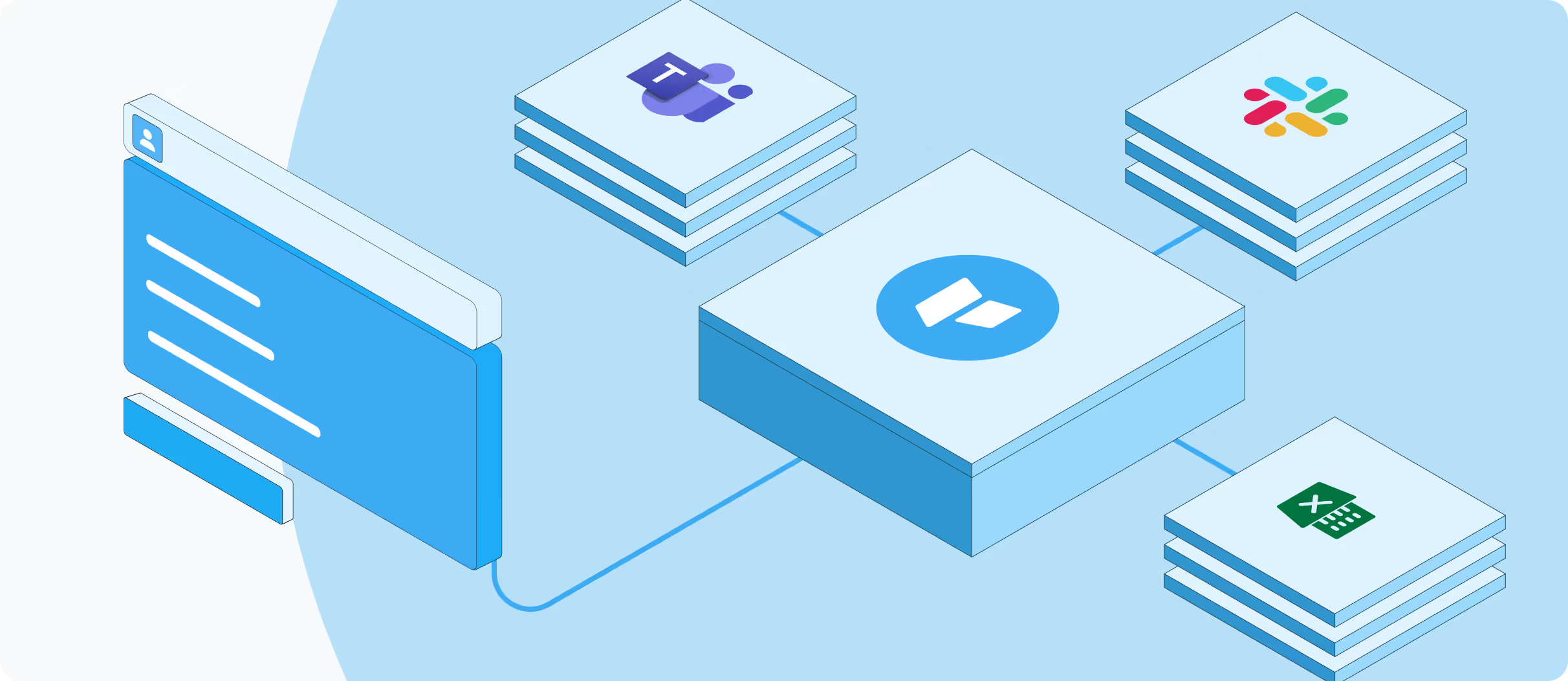
Protex AI uses computer vision and video analysis to transform existing CCTV into continuous visibility across facility movement. Operations teams gain objective insight into flow, congestion, and layout performance without relying on manual studies or one-time analysis.
See how processes unfold in practice
Computer vision perceives process conditions and zone-level operational flow, giving teams a clear picture of how work sequences unfold across the facility, without relying on manual spot-checks.
Compare observed process patterns to expectations
See where process patterns drift from expected sequences and where operational design may need adjustment — with objective data across every shift.
Understand why process patterns shift
Video provides context when execution deviates, such as missing materials or sequencing gaps, helping teams fix root causes instead of guessing, backed by visual evidence.
Step in when process issues appear
Set thresholds to trigger notifications when process conditions fall outside expected operational ranges. Teams can respond quickly to make changes early and prevent small variances from turning into larger disruptions.
See how processes unfold in practice
Computer vision perceives process conditions and zone-level operational flow, giving teams a clear picture of how work sequences unfold across the facility, without relying on manual spot-checks.
Compare observed process patterns to expectations
See where process patterns drift from expected sequences and where operational design may need adjustment — with objective data across every shift.
Understand why process patterns shift
Video provides context when execution deviates, such as missing materials or sequencing gaps, helping teams fix root causes instead of guessing, backed by visual evidence.
Step in when process issues appear
Set thresholds to trigger notifications when process conditions fall outside expected operational ranges. Teams can respond quickly to make changes early and prevent small variances from turning into larger disruptions.

Proven Impact at Scale

Explore more operational solutions
Uncover our operational solutions designed to enhance your proactive safety measures.
Watch Our 2-Minute Demo Video
Looking to learn more about revolutionizing how you and your team make proactive safety decisions that help contribute to a safer work environment?
Our product
Explore the Protex Al enterprise-ready solution

Ask The Expert
Here are some common questions our product experts have been asked by EHS professionals around the topic of Al safety. If you have any question in particular that you need answered please don't hesitate to contact us.
The system benchmarks real-world movement against your intended operational layout. It measures route deviation and traverse time to identify repeated detours — giving you the evidence to determine whether the cause is a flawed layout or an SOP that has drifted from its original design.
Yes. By quantifying total travel time lost to indirect routes and mapping which zones generate the most deviation, you can build an objective, data-backed business case for structural layout changes — the kind of evidence that moves a capital request forward.
Heatmaps surface how floor space is being used across zones and time periods. If high-value floor space shows consistently low activity during peak shifts, the system flags it as an opportunity for storage expansion, equipment repositioning, or workflow reconfiguration — turning underused square footage into throughput capacity.