







See Operational State Analysis In Action
Downtime Dynamics
Explore how machine changeovers vary across time and stages. Highlight where sequences shift and handoffs break down, with video insights uncovering structural drivers behind changeover variability. Quantify where time accumulates across process stages so teams can identify friction points during normal operations
Picking Insights
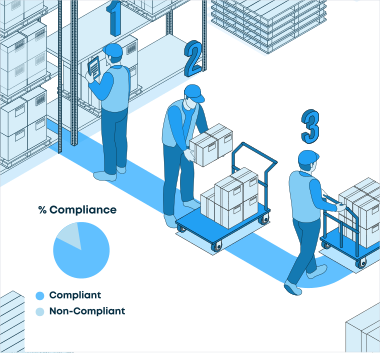
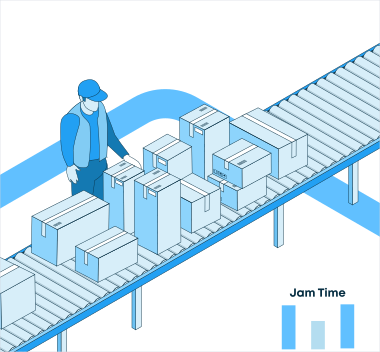
Pick operations have many moving parts, and it's rarely obvious which are creating the most drag on throughput. Measuring process and stage progressions across pick zones gives teams the context to address what's actually constraining flow rather than just where the symptom shows up.
Dock Utilization
Extended trailer dwell time tends to ripple quickly across inbound and outbound KPIs in ways that aren't always visible until throughput has already taken a hit. Dock Utilization measures how long trailers occupy dock doors and tracks when loading and unloading activity stalls, surfacing bottlenecks and service delays early enough to act on them.
Equipment Utilization
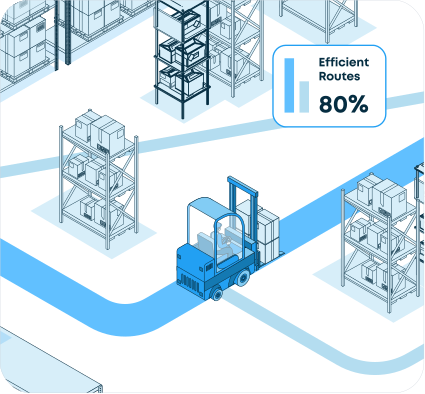
Equipment availability and equipment utilization are not the same thing, and the gap is often larger than teams expect. Equipment Utilization measures active use versus periods of low utilization across assets like forklifts, revealing underused resources so teams can get more from what's already on the floor.
Built on Your Existing Infrastructure
Protex AI uses your existing CCTV cameras to surface where delays accumulate across processes. Operations managers gain consistent, objective insight without manual time studies or placing additional burden on frontline managers.
See how processes unfold in practice
Computer vision perceives process conditions and zone-level operational flow, giving teams a clear picture of how work sequences unfold across the facility, without relying on manual spot-checks.
Compare observed process patterns to expectations
See where process patterns drift from expected sequences and where operational design may need adjustment — with objective data across every shift.
Understand why process patterns shift
Video provides context when execution deviates, such as missing materials or sequencing gaps, helping teams fix root causes instead of guessing, backed by visual evidence.
Step in when process issues appear
Set thresholds to trigger notifications when process conditions fall outside expected operational ranges. Teams can respond quickly to make changes early and prevent small variances from turning into larger disruptions.
See how processes unfold in practice
Computer vision perceives process conditions and zone-level operational flow, giving teams a clear picture of how work sequences unfold across the facility, without relying on manual spot-checks.
Compare observed process patterns to expectations
See where process patterns drift from expected sequences and where operational design may need adjustment — with objective data across every shift.
Understand why process patterns shift
Video provides context when execution deviates, such as missing materials or sequencing gaps, helping teams fix root causes instead of guessing, backed by visual evidence.
Step in when process issues appear
Set thresholds to trigger notifications when process conditions fall outside expected operational ranges. Teams can respond quickly to make changes early and prevent small variances from turning into larger disruptions.

Proven Impact at Scale
Explore more operational solutions
Uncover our operational solutions designed to enhance your proactive safety measures.
Watch Our 2-Minute Demo Video
Looking to learn more about revolutionizing how you and your team make proactive safety decisions that help contribute to a safer work environment?
Our product
Explore the Protex Al enterprise-ready solution

Common Questions from Operations Teams
Here's what operations managers and facility teams typically want to know before getting started.
Your WMS captures digital transactions — scans, completions, outputs. Protex AI captures what's happening physically between those transactions: equipment use, changeovers running long, dock doors occupied without activity. It bridges the gap between what your system of record shows and what's actually happening on the floor, giving you video context to help unblock your teams.
Protex AI surfaces aggregate levels of use across equipment like forklifts. If your equipment is consistently showing prolonged periods of inactivity, video insights help you determine whether the cause is a scheduling gap, a workflow bottleneck, or an asset allocation problem.
Absolutely. Protex AI shows how long trailers occupy dock doors and flags when loading or unloading activity stalls. If a door is blocked and causing a delay, the data surfaces it before it hits your throughput numbers.