








See Flow Stability In Action
Flow Disruption
Identify periods when conveyors or material handling systems are running without consistent inbound or outbound movement. Highlight upstream constraints and downstream blockages that interrupt flow, helping teams pinpoint where logistics processes break down and ripple across operations.
Line Starvation
Material flow interruptions upstream rarely stay contained. Measuring when and how long stations are without incoming material highlights the upstream constraints behind supply gaps so teams can trace systemic causes before they ripple further across the operation.
Belt Jam Detection
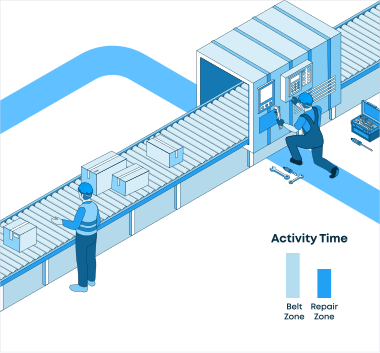
A jam that goes undetected for even a few minutes can trigger a cascade of delays that takes far longer to recover from. Measuring when conveyor belts are congested or blocked and tracking restoration time gives teams the speed to act and the video context to get to the bottom of the upstream issues driving repeated disruptions.
Built on Your Existing Infrastructure
Use computer vision to monitor material movement and line conditions continuously with Protex AI. Gain insights into interruptions, imbalances, and stalled flow without relying on manual checks or after-the-fact metrics.
See how processes unfold in practice
Computer vision perceives process conditions and zone-level operational flow, giving teams a clear picture of how work sequences unfold across the facility, without relying on manual spot-checks.
Compare observed process patterns to expectations
See where process patterns drift from expected sequences and where operational design may need adjustment — with objective data across every shift.
Understand why process patterns shift
Video provides context when execution deviates, such as missing materials or sequencing gaps, helping teams fix root causes instead of guessing, backed by visual evidence.
Step in when process issues appear
Set thresholds to trigger notifications when process conditions fall outside expected operational ranges. Teams can respond quickly to make changes early and prevent small variances from turning into larger disruptions.
See how processes unfold in practice
Computer vision perceives process conditions and zone-level operational flow, giving teams a clear picture of how work sequences unfold across the facility, without relying on manual spot-checks.
Compare observed process patterns to expectations
See where process patterns drift from expected sequences and where operational design may need adjustment — with objective data across every shift.
Understand why process patterns shift
Video provides context when execution deviates, such as missing materials or sequencing gaps, helping teams fix root causes instead of guessing, backed by visual evidence.
Step in when process issues appear
Set thresholds to trigger notifications when process conditions fall outside expected operational ranges. Teams can respond quickly to make changes early and prevent small variances from turning into larger disruptions.

Proven Impact at Scale

Explore more operational solutions
Uncover our operational solutions designed to enhance your proactive safety measures.
Watch Our 2-Minute Demo Video
Looking to learn more about revolutionizing how you and your team make proactive safety decisions that help contribute to a safer work environment?
Our product
Explore the Protex Al enterprise-ready solution


Ask The Expert
Here are some common questions our product experts have been asked by EHS professionals around the topic of Al safety. If you have any question in particular that you need answered please don't hesitate to contact us.
Belt jams are detected within seconds of a blockage forming. Most sites relying on manual observation or downstream throughput drops don't catch a jam until it's been building for several minutes. Faster detection means faster response, and shorter recovery windows mean fewer units lost per incident.
Protex AI identifies periods when your assembly or production stations are ready but material flow has been interrupted upstream. Seeing exactly where and how often starvation occurs lets you address the upstream constraint rather than compensating downstream.
Yes. The system helps you track jam frequency, duration, and recovery time — giving you a clear picture of its impact on throughput by event or shift. That data is directly usable for OEE reporting, SLA risk analysis, and prioritizing which conveyor sections warrant engineering attention.