
How one manufacturing specialist found a $500M opportunity in data he already had.

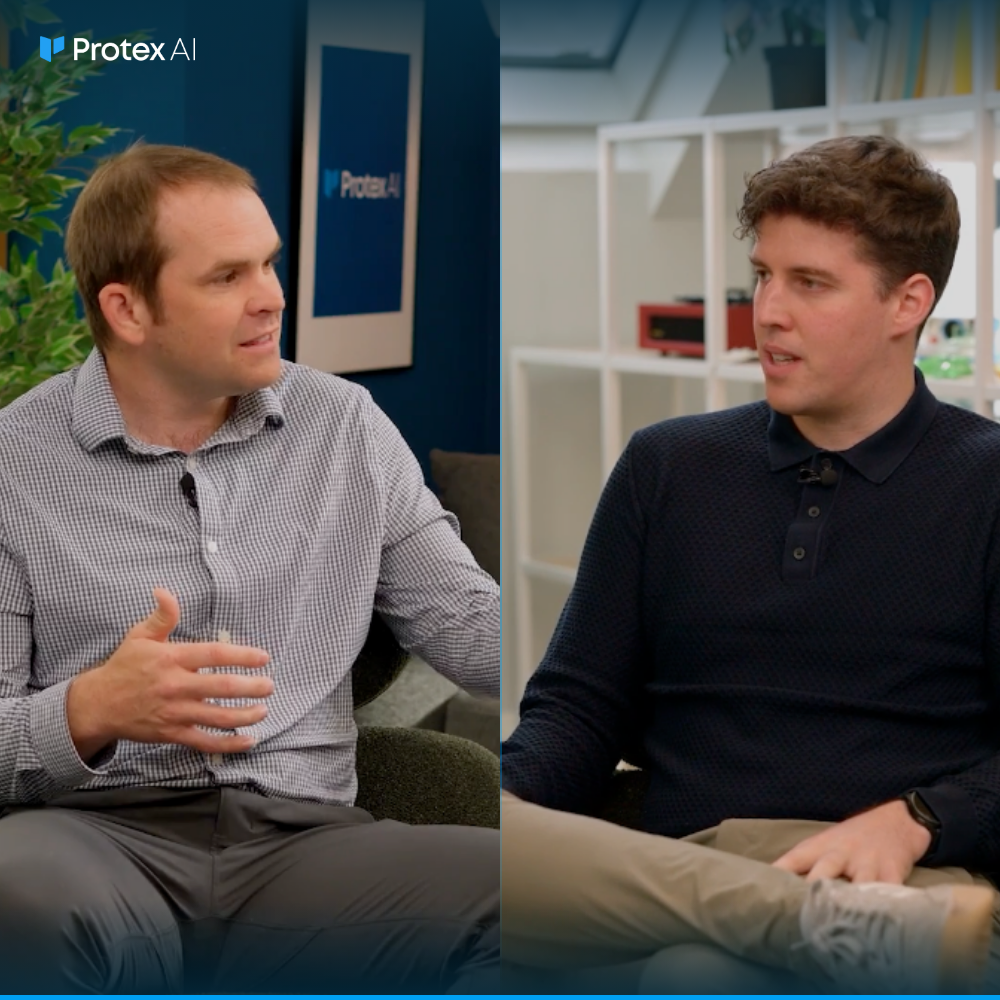
Jeff has spent his career in manufacturing. He knows what a factory floor sounds like at 2am, what a changeover looks like when it goes wrong, and what it costs when it does. He also knows something most people in his position have quietly accepted: a lot of what happens on that floor simply disappears.
Not because nobody cares. Because nobody can see it.
"The amount of material we're putting value into and then putting in the bin," he says, "is something everybody is working on. The biggest source of downtime we have is startups and changeovers. That spans almost every process you can imagine - optical films, sandpaper, Scotch tape. It's everywhere."
Jeff is a Senior Manufacturing Technology Specialist at 3M. He's been working with Protex AI's site intelligence and operational visibility platform for the past two years, connecting camera data with process data across his organisation's production lines.. When you add up the yield opportunity sitting in data his organisation already has - already collected, already stored - the figure is probably more than half a billion dollars.
"I don't say that lightly," he says.
Why time studies only show you the best part of the day
The standard tool for understanding a production line has been the time study for decades. Someone walks the floor with a clipboard. They observe, record, go back to their desk and write a report.
Jeff knows this ritual. He also knows its flaw.
"When you do a time study, everybody's working as fast as they can. You're an overlord with a clipboard, and you're seeing the best part of the day."
Most downtime doesn't happen during the best part of the day. It happens during a handover, a setup, a moment when nobody with a clipboard is watching. An operator adjusts a knife position. The web nicks. The line stops. By the time anyone asks what happened, the moment is gone.
"There's no way you can get that from process data," Jeff says. "But you need to know why it happened."
Video fills that gap - not just as footage, but as context. What were the ten minutes before? Not what the sensors logged. What actually happened.
Jeff's team tested this with a quality defect that kept appearing on one of their lines. They pulled the last 15 instances. In every case, within ten minutes of the defect, an operator had been at the die and cleaned the lip improperly. They had video for each one.
"When you can show that to an executive - here's the footage, here's the process data, here's the correlation - you don't need to spend time making the case. The answer is right there."
How a non-engineer found hundreds of thousands in yield opportunity in an hour
Jeff blocked out one hour. A specific yield problem had been nagging at him and he wanted to look at it properly.
He doesn't work on the line. He's not a process engineer. He had no particular reason to be the one to find it.
Within the hour, he had found hundreds of thousands of dollars in yield opportunity.
There was a quality metric at the very beginning of the process that correlated directly with downstream yield loss. When Jeff first saw the relationship, he didn't believe it.
"My answer was: no, this can't be correct. Because if it were correct, we would have solved this already."
It was correct. A handful of products were extremely sensitive to this metric - and once the camera data and process data sat side by side, the relationship was obvious. Nobody had missed it because they weren't trying. They just couldn't see it.
"That's something that wasn't maybe an obvious answer," Jeff says. "But looking at the data like this, it's really clear."
The step between data and insight that's costing manufacturers weeks
The path from raw data to a usable answer runs through a middle layer most organisations can't easily access. A data engineer to pull the vision data. An analytics expert to make sense of it. Weeks, sometimes, before the question you started with becomes something you can act on.
"The traditional process goes from data to information to knowledge," Jeff says. "And what you want at the end is the knowledge. But the middle layer - getting from data to information - that step traditionally takes specialists. It takes time. And by the time you have the answer, the opportunity has often already moved."
What Protex changed is the bridge. The data still needs to exist. The conclusion still needs to come from a human. But the translation step - from footage and sensor readings into something you can actually use - works differently now.
"There's a simple beauty in being able to visually look at the problem you're trying to solve and connect camera data with process data to pinpoint where to focus. It's both simple and powerful."
Why removing the human from AI decision-making is the biggest mistake you can make
Jeff is excited about where this is going. He's also uneasy about it, in the same breath.
"What excites me and what makes me nervous go hand in hand," he says.
The upside: a system that learns from the people who know the line best, then feeds that expertise back as a signal. Five things to focus on, not two hours of sifting. The domain knowledge doesn't disappear into the system - it comes back sharper.
The risk is just as real, and Jeff doesn't dress it up.
"The thing I'm most concerned about is if you start taking the domain expert out of the loop. If you reach a point where the attitude becomes: the system knows what's going on, the expert already taught it, so we'll just do whatever it says. That's the worst possible thing you can do."
The people who've spent 25 years on the line still need to be the ones drawing the conclusion. The AI surfaces what to look at. They decide what it means.
"The AI doesn't generate the value. The expert with the right information generates the value."
We installed one camera. It found three problems we didn't know we had.
Jeff's advice for manufacturers who haven't built out their camera infrastructure yet is simple: start.
The upfront cost feels heavy - installation, conduits, network connections. But once the infrastructure is in, what it gives back is permanent.
"We put a camera in to look at one specific thing. We found three other insights about that area that we weren't even looking for."
"Continually building that installed base of camera data within a facility - I genuinely believe that becomes more valuable every year."
The half billion was always there. In data already generated, on lines already running. Nobody had been able to see it. Now they can.
To learn more about site intelligence and what it could surface on your operation: watch our 2-minute demo video here.
Check Out Our Industry
Leading Blog Content
EHSQ industry insights, 3rd Gen EHSQ AI-powered technology opinions & company updates.
.jpg)
.avif)
.avif)