

%20(25).png)
AI is reshaping workplace safety through predictive analytics that prevent incidents, privacy-preserving site intelligence, and automated compliance systems. Organizations using AI safety platforms report up to 30% fewer workplace incidents and 40% faster audit preparation.
What you'll learn:
- Computer vision AI detects PPE non-compliance, slip and fall risks, and collision hazards in real time across manufacturing and logistics sites.
- Explore six actionable trends in this guide, including predictive analytics and compliance automation strategies.
- Protex AI integrates with existing CCTV systems and supports multi-site operations in manufacturing, warehousing, logistics, and ports.
- Organizations using AI safety platforms report 25-30% fewer workplace incidents and 40% faster audit preparation.
- Privacy-preserving Industrial AI helps organizations achieve GDPR and CCPA compliance through anonymized data and local edge processing.
- AI-driven tools increase hazard reporting by 20% through gamified systems and real-time corrective notifications.
What shifts are currently defining workplace safety?
Every year, workplace accidents cost businesses billions of dollars and, more importantly, endanger the lives of employees. Thankfully, 2026 promises to be a turning point for workplace safety, driven by the increasing adoption of Artificial Intelligence (AI).
In this article, we'll break down the most critical AI-driven trends that are reshaping workplace safety in 2026. You'll also discover how leading workplace safety innovations are transforming the industry. You’ll finish with actionable steps you can apply to your safety program.
Current Challenges Driving the Adoption of Safety AI
According to the 2025 Liberty Mutual Workplace Safety Index, workplace injuries cost U.S. businesses over $58.78 billion per year. This figure shows why businesses need to shift from reactive to proactive safety management strategies.
Many organizations still rely on outdated systems and manual processes. Those gaps increase incident exposure and raise the risk of costly fines. Safety teams also face higher expectations as regulators and workers push for stronger protections and clearer accountability.
You're Reviewing Last Quarter's Incident Reports Again
You're staring at spreadsheets from three different sites, each formatted differently, each missing critical context about what actually happened before the incident. Your CFO wants proof that safety investments reduce costs. Your IT director needs assurance that any new platform won't create data privacy headaches.
Your frontline supervisors need real-time alerts, not reports they read days after an event. You need a system that connects these dots without requiring your team to become data scientists or compliance falling further behind.
Evolving regulatory demands and penalty risks
Regulators keep tightening requirements, and agencies like OSHA issue large penalties for non-compliance. In 2025, OSHA handed down a $1.22 million fine to a Connecticut concrete and earthwork contractor after uncovering seven willful violations and four serious ones, then issued another $1.13 million penalty to a New Jersey fresh-cut vegetable processor following a fatal incident.
Repeat offenders such as Dollar General and its parent company, Dolgencorp, have faced over $21 million in proposed fines since 2017 across 240 inspections. At the same time, global privacy laws like GDPR and CCPA are pushing organizations to modernize their strategies to ensure strict compliance with data protection requirements.
Fragmented technology and data silos
Despite advancements in safety technology, many organizations continue to rely on siloed systems that fail to integrate cleanly. Legacy platforms, like standalone spreadsheets, outdated incident reporting software, or manual paper-based systems, frequently lack the connectivity required for data-driven decision-making.
Disconnected tools create gaps in incident tracking and risk prevention. Teams miss chances to cut hazards and improve operations because the data does not move between systems.
Rising incident rates across global industries
The global increase in workplace incidents adds significant complexity to the market.
Workplace hazards kill approximately 140,000 workers each year, including 5,283 traumatic injury deaths and an estimated 135,304 deaths from occupational diseases in 2023. This ongoing toll reflects persistent pressures such as rapid industry expansion, labor shortages, and inconsistent safety practices across sites.
This alarming trend highlights the urgent need for standardized, technology-driven safety protocols that can address risks consistently and at scale.
Workforce expectations and ESG priorities
The modern workforce is also driving change, with employees demanding safer, more transparent work environments. Organizations are being held accountable not only for reducing incidents but also for ESG alignment in workplace safety strategies.
These factors are pushing businesses to adopt technologies that enhance both safety and sustainability, further fueling the demand for forward-thinking solutions.
Growing investment in safety technology
In response to these challenges, the workplace safety market continues to attract investment in technology solutions, particularly those using AI and IoT. Predictive analytics, real-time siteintelligence, and compliance automation are no longer viewed as optional but as essential tools for businesses striving to remain competitive.
Examining these current market conditions reveals that workplace safety is at a pivotal turning point. Organizations that fail to adapt risk falling behind, while those that embrace innovation can create safer, more efficient, and compliant work environments.
The future of workplace safety is already being shaped, with modern trends showcasing how AI in safety and security is revolutionizing safety practices and driving significant change across industries.
Top AI-Driven Trends Reshaping Industrial Safety
The following trend analysis shows how industrial teams move from reactive responses to proactive safety programs while improving compliance and operational performance.
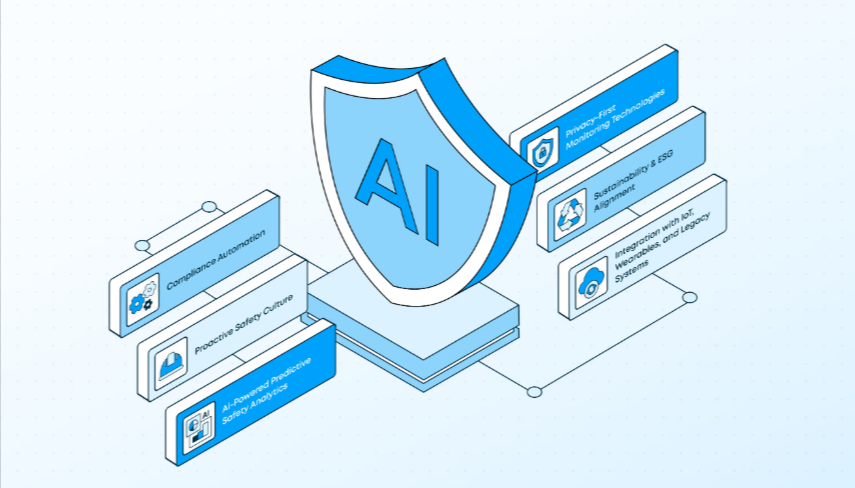
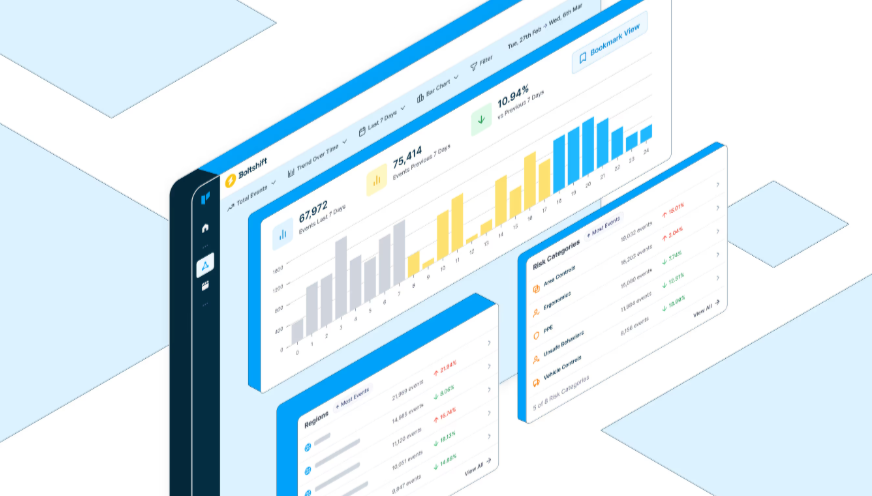
Predictive analytics for accident prevention
AI improves safety management by analyzing historical and real-time data to predict potential risks before they escalate into incidents. These algorithms uncover patterns and behaviors that might be missed by human oversight, offering a proactive approach to workplace safety.
For example, predictive analytics can monitor forklift operations to detect signs of operator fatigue or unsafe behaviors. Advanced AI analytics can flag where forklift risk is likely to emerge next, helping teams spot potential collision hotspots in real time and act before an incident happens.
It can also track equipment conditions to forecast maintenance needs, preventing malfunctions. Businesses using this technology, such as a Protex AI client in logistics, have reported a 25% reduction in workplace incidents, showcasing its powerful impact on safety outcomes.
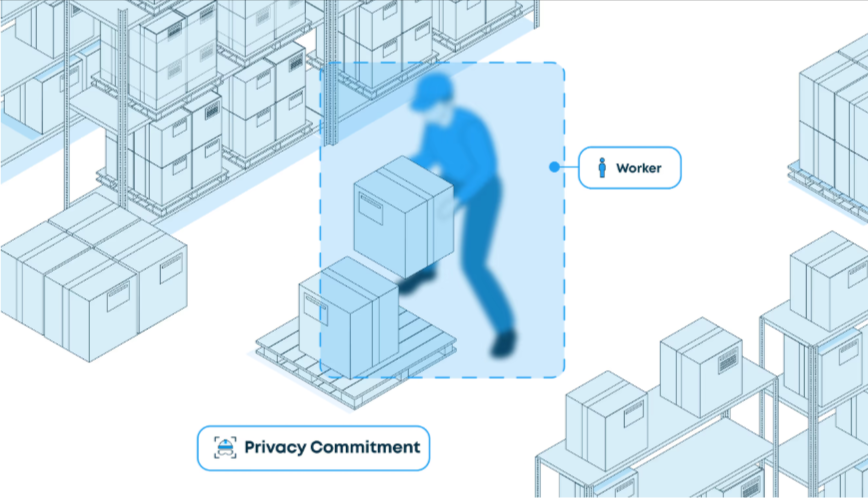
Privacy-preserving site intelligence standards
As data collection grows, privacy concerns are becoming a top priority for both employees and regulators. AI addresses these issues by focusing on privacy-preserving Industrial AI, such as anonymized data and federated learning, which ensure sensitive information stays on local systems.
This approach balances safety improvements with ethical data use. For instance, a European manufacturer using Protex AI achieved full GDPR compliance while boosting safety performance by 30%, demonstrating how privacy-focused AI can enhance trust without sacrificing results.
Integration with IoT and wearable devices
AI enables seamless integration between IoT devices, wearable technology, and legacy safety systems, creating a connected safety ecosystem. This allows organizations to collect real-time data and address risks dynamically.
Wearable technology, such as smart helmets and sensor-embedded safety vests, can track worker fatigue, ergonomic movement analysis, or exposure to hazardous conditions. IoT sensors can predict equipment failures before they occur.
A global food manufacturer partnered with Protex AI to integrate these tools across 50 sites, reducing incidents related to improper lifting techniques and musculoskeletal injury prevention while improving operational efficiency.

Automated PPE detection and compliance signals
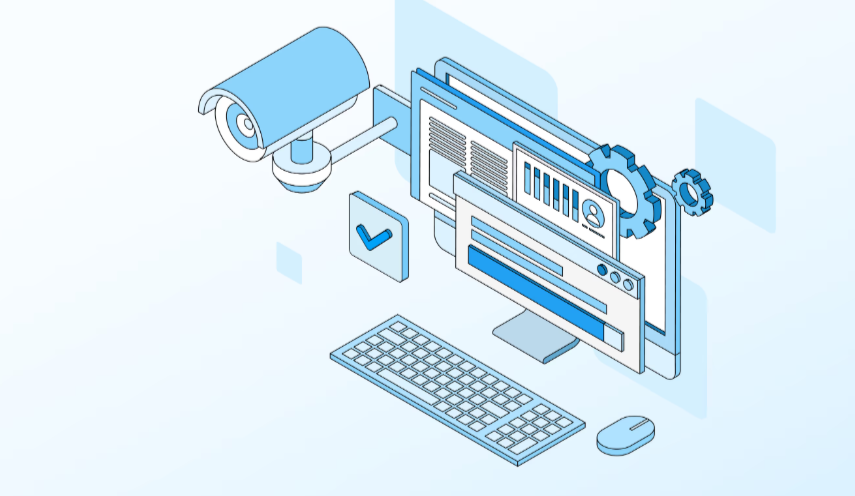
Managing compliance is one of the most resource-intensive tasks for EHS leaders. AI reduces that burden by automating gap detection and generating audit-ready reports.
Modern systems now incorporate PPE compliance detection capabilities, including hard hat detection, safety vest compliance, and restricted area signals that help teams see where safety risks cluster. This saves significant time and resources.
A North American logistics company using Protex AI reduced audit preparation time by 40%, freeing up its team to focus on strategic initiatives. Compliance automation not only ensures accuracy but also reduces violations and associated costs.
Empowering a proactive safety culture
AI supports a shift from reactive safety management to proactive engagement by helping employees take ownership of safety. Tools like gamified reporting systems and real-time corrective notifications encourage active participation in risk identification and resolution.
For example, Protex AI's behavior analysis tools helped a logistics client increase hazard reporting by 20%. This improvement boosted employee accountability and significantly enhanced workplace safety metrics, underscoring the value of an engaged workforce.
ESG alignment and energy reduction
Sustainability is now a core business priority, and AI is helping organizations align safety with their Environmental, Social, and Governance (ESG) goals. Optimizing safety protocols through AI enabled workplace safety reduces waste and minimizes energy consumption.
A multinational corporation used Protex AI to track energy use during safety operations, achieving a 15% reduction. Aligning safety with ESG not only improves sustainability performance but also builds stakeholder confidence and supports long-term growth.

These trends demonstrate how AI is not just a tool but a transformative force in workplace safety. To make the most of these advancements, EHS leaders need clear strategies for implementing AI within their organizations.
Actionable Steps for EHS Leaders
With AI's potential clearly established, the next question is: how can organizations effectively adopt and leverage these tools?
Evaluate existing safety management gaps
Before you invest in AI adoption, conduct a thorough evaluation of your current safety management systems. Identify manual processes that create delays or missed signals. Focus on areas like compliance tracking, incident reporting, and risk assessment.
For example:
- Are compliance audits taking longer than necessary due to disorganized data?
- Do you lack real-time visibility into the signals for high-risk activities?
1. Adopt scalable and integrable solutions
When selecting an AI safety platform, prioritize scalability. Your chosen solution should integrate seamlessly with existing tools like CCTV systems, IoT devices, and legacy databases. A scalable system ensures that as your organization grows or introduces new safety requirements, the technology can expand and adapt without significant overhauls.
Consider platforms that:
- Offer modular features, so you can add functionalities like advanced reporting or IoT integration as needed.
- Support multi-site operations, providing centralized insights while addressing site-specific risks.
2. Engage employees in the digital transition
AI can empower employees to take a more active role in workplace safety. Gamified tools, for example, make safety reporting engaging by rewarding proactive behaviors. Real-time notifications from AI systems can also prompt immediate corrective actions, keeping workers informed and involved.
Ways to engage employees include:
- Training programs that familiarize workers with new AI-driven tools.
- Encouraging team discussions around data insights to create a shared sense of accountability.
3. Measure impact and ROI
To ensure AI delivers its intended benefits, regularly track and evaluate its performance. Use measurable KPIs like incident reduction rates, compliance improvements, and cost savings to assess ROI. Additionally, consider the qualitative impacts, such as improved worker confidence and alignment with ESG goals.
Steps to measure impact:
- Establish a baseline by reviewing pre-AI safety data.
- Schedule periodic evaluations to track progress and identify areas for optimization.
- Use AI-generated reports to demonstrate value to stakeholders, from board members to employees.
These steps position organizations among companies leading workplace safety innovations through the strategic implementation of advanced safety technology. But even with the right strategy, success often depends on choosing the right partner to guide the process.
How Protex AI Supports Safer Industrial Workplaces
Protex AI is among the leading AI hazard detection companies at the forefront of revolutionizing workplace safety by harnessing the power of artificial intelligence to mitigate risks and enhance compliance.
Our workplace safety AI solutions proactively identify unsafe behaviors and deliver actionable insights that build a proactive safety culture in industries like logistics, manufacturing, retail, and warehousing.
Using advanced computer vision technology, Protex provides real-time data that empowers safety managers to make informed decisions, reduce accidents, and streamline operations.
As safety trends continue to evolve in 2026 and beyond, Protex AI equips businesses with the tools they need to stay ahead, ensuring safer workplaces while boosting efficiency and productivity.
Check Out Our Industry
Leading Blog Content
EHSQ industry insights, 3rd Gen EHSQ AI-powered technology opinions & company updates.
.jpg)
.avif)
.avif)